Paper or app
Digital vs. Paper Journaling: Which Fits Your Routine?
Paper gives you a blank surface and time away from a screen. A digital journal is easier to carry, search, back up, and connect to trackers. The right choice depends on why you journal.
Where paper is strongest
Paper is good for handwriting, drawing, and a screen-free routine. A blank notebook accepts any layout immediately, and it does not need a battery or software update.
You do have to redraw repeated layouts. Searching old entries and backing up the notebook take more work, and a monthly habit count is still a manual count.
Where digital is strongest
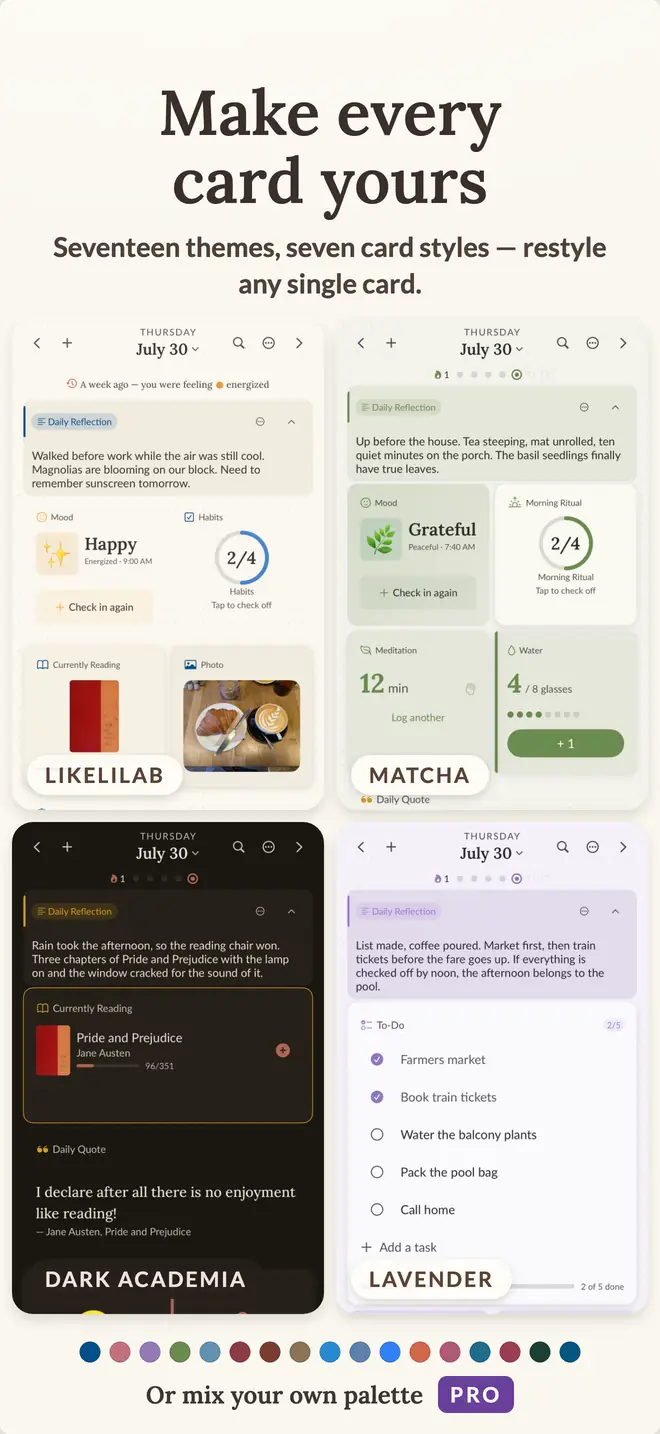
A phone is usually already with you. Templates can create the daily layout, search can find an old entry, and interactive widgets can handle a quick habit check. An app can also summarize moods or fill selected trackers from Apple Health.
The tradeoff is more screen time and dependence on the app. Check how the journal is stored, whether you can export it, and whether the layout can change with you.
A practical decision test
Try each format for an ordinary week. Pay attention to the busy days, not the afternoon when you had time to set everything up. Which journal fit into the day? Which entry was easier to finish?
- Choose paper for tactile focus and unrestricted drawing
- Choose digital for portability, search, templates, and tracking
- Use both if you prefer handwriting but want automatic trackers
A hybrid system is valid
There is no reason to move the whole notebook into an app. You can write long entries on paper and use Vivid for habits, mood, reading, or health information. You can also keep occasional paper pages inside an otherwise digital routine.
Back to the page
your day, kept.
One page for writing, habits, mood, sleep, and reading, stored in your own iCloud. Free to start on iPhone and iPad.